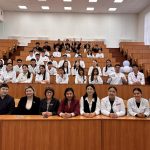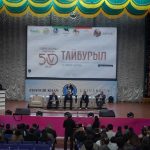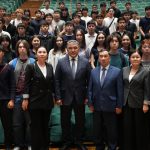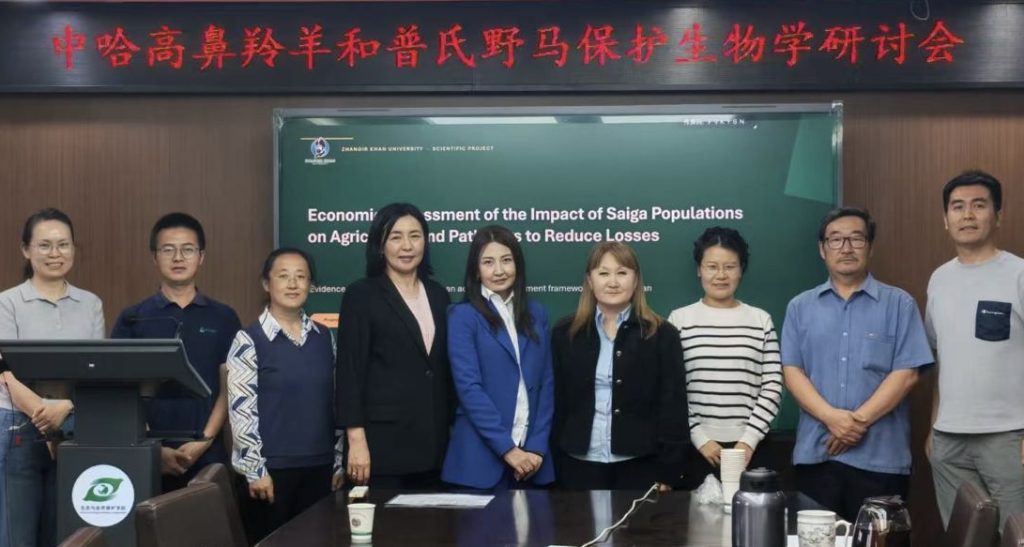
On 10 October, the China-Kazakhstan Symposium on the Conservation Biology of the Saiga Antelope and Przewalski’s Horse was held at Beijing Forestry University. The event brought together researchers and specialists studying wildlife conservation, population status, and the interaction between wildlife and agriculture.
The symposium took place in the university’s Main Building. The programme included presentations on the impact of saiga populations on agricultural production and pasture ecosystems in Kazakhstan, saiga population genomics, and the reintroduction and conservation of Przewalski’s horse. The meeting was coordinated by Associate Professor Qin Xinghu of Beijing Forestry University.
Three WKATU project participants travelled to China to attend the symposium: Associate Professors Gulshat Aiesheva and Saltanat Yessengaliyeva, and Acting Associate Professor Kanbibi Gumarova. The project is led by Associate Professor and Candidate of Economic Sciences Aigul Kazambayeva.
Professor Alzhan Smayiluly, Vice-Rector for Research at WKATU, provided organisational support in preparing the trip and the delegation’s participation in the symposium. The project team thanked him for supporting international scientific cooperation.
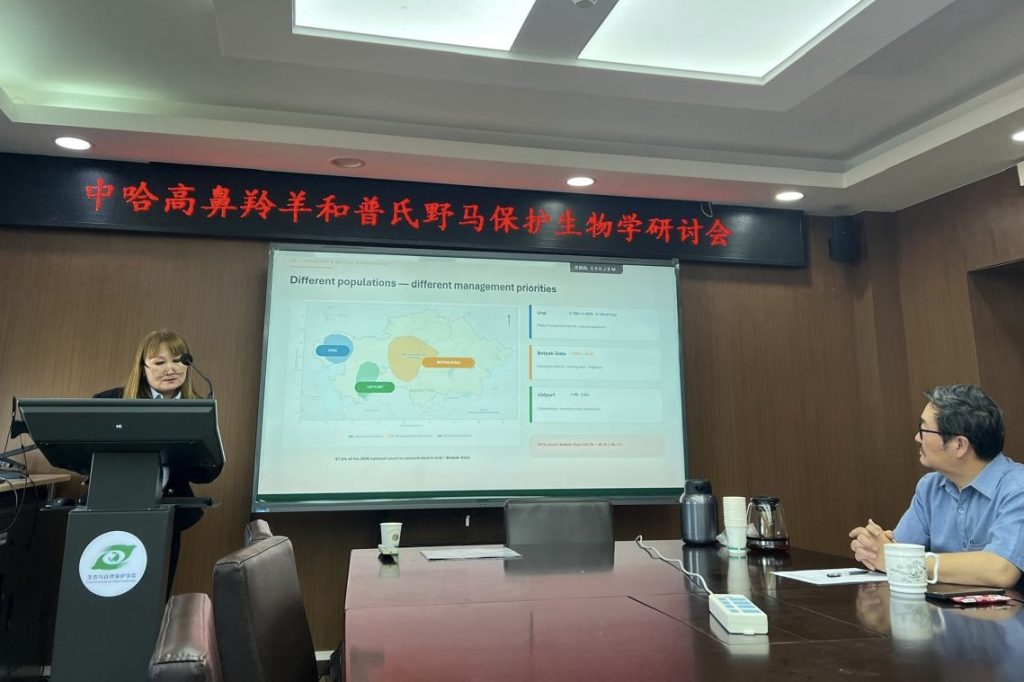
Gulshat Aiesheva presented «Economic Assessment of the Impact of Saiga Populations on Agriculture and Pathways to Reduce Losses». Her presentation addressed the potential impact of saigas on farmland and pastures, the assessment of related risks, and approaches to reducing losses. It also highlighted the value of spatial analysis in identifying areas where interactions between wildlife and agricultural production are most pronounced and where targeted support may be needed.
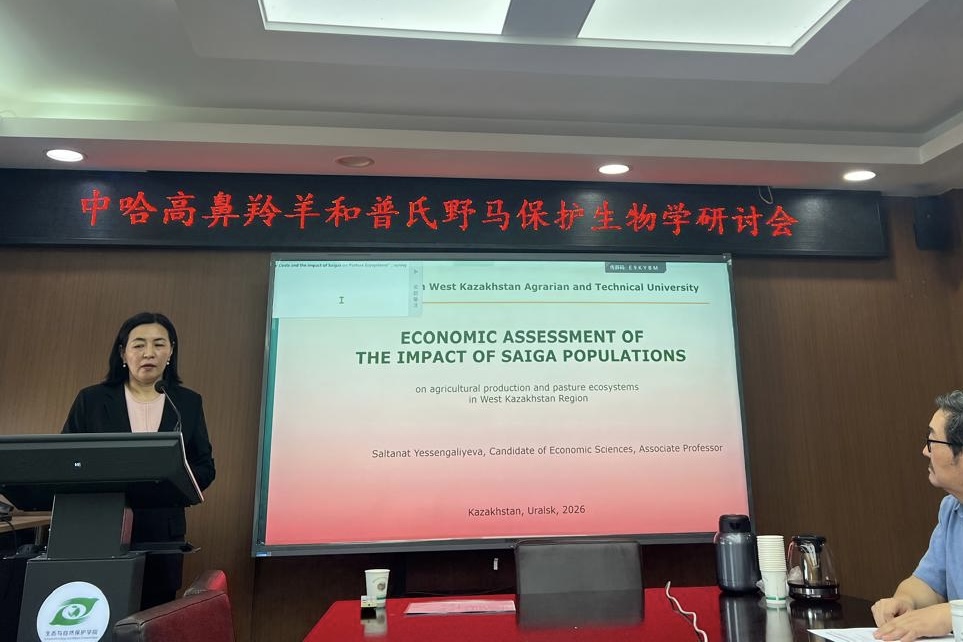
Saltanat Yessengaliyeva presented «Economic Assessment of the Impact of Saiga Populations on Agricultural Production and Pasture Ecosystems in the West Kazakhstan Region». She discussed approaches to studying the links between saiga movements, pasture use, and agricultural activity.
The WKATU researchers focused on identifying solutions that can both protect saigas and reduce potential losses for agricultural producers. This approach takes local conditions into account, involves ongoing monitoring, and supports the targeted selection of measures for areas with different levels of risk.
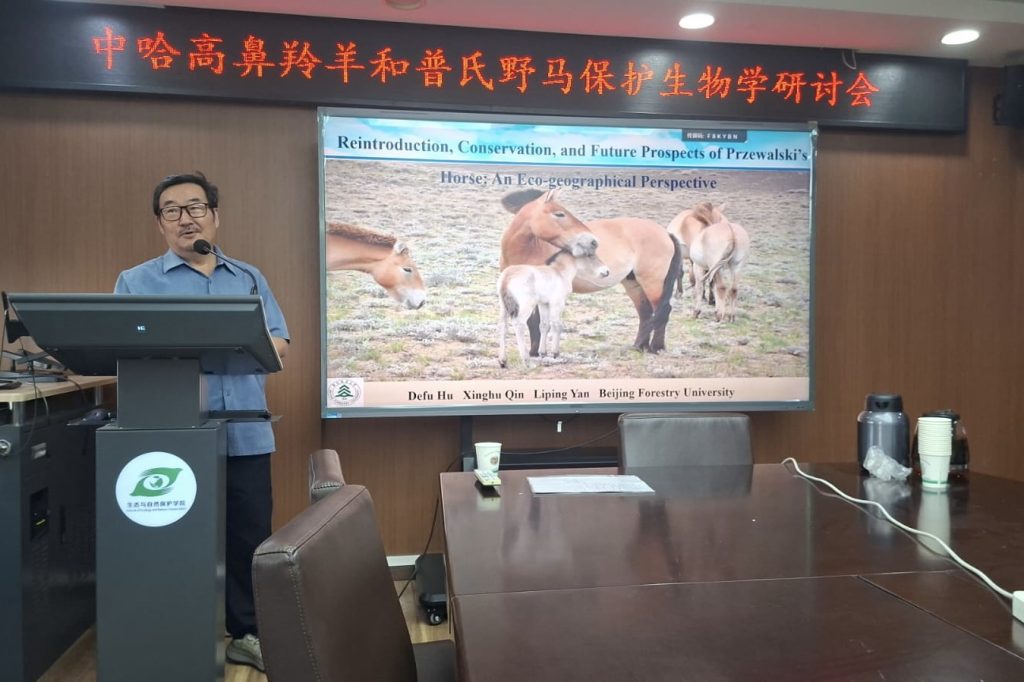
Another presentation focused on Przewalski’s horse. Professor Hu Defu of Beijing Forestry University discussed the outcomes of reintroducing the horses into the wild and prospects for further population recovery, taking natural and geographical conditions into account. The programme also included a presentation by Associate Professor Liping Yan on the non-invasive assessment of survival among reintroduced Przewalski’s horses, and a presentation by researcher Qing Ti on saiga population genomics.
The Kazakhstani researchers expressed their sincere gratitude to the leadership and university community of Beijing Forestry University for their hospitality, for organising the symposium, and for providing an opportunity for scientific exchange. Special thanks were extended to Professors Hu Defu and Qin Xinghu, the university’s other researchers, and the doctoral, master’s, and undergraduate students who took part in the event.
The participation of WKATU representatives provided an opportunity to present the project’s findings to the international research community, exchange knowledge with colleagues from other countries, and discuss future cooperation in wildlife conservation and the sustainable development of rural areas.